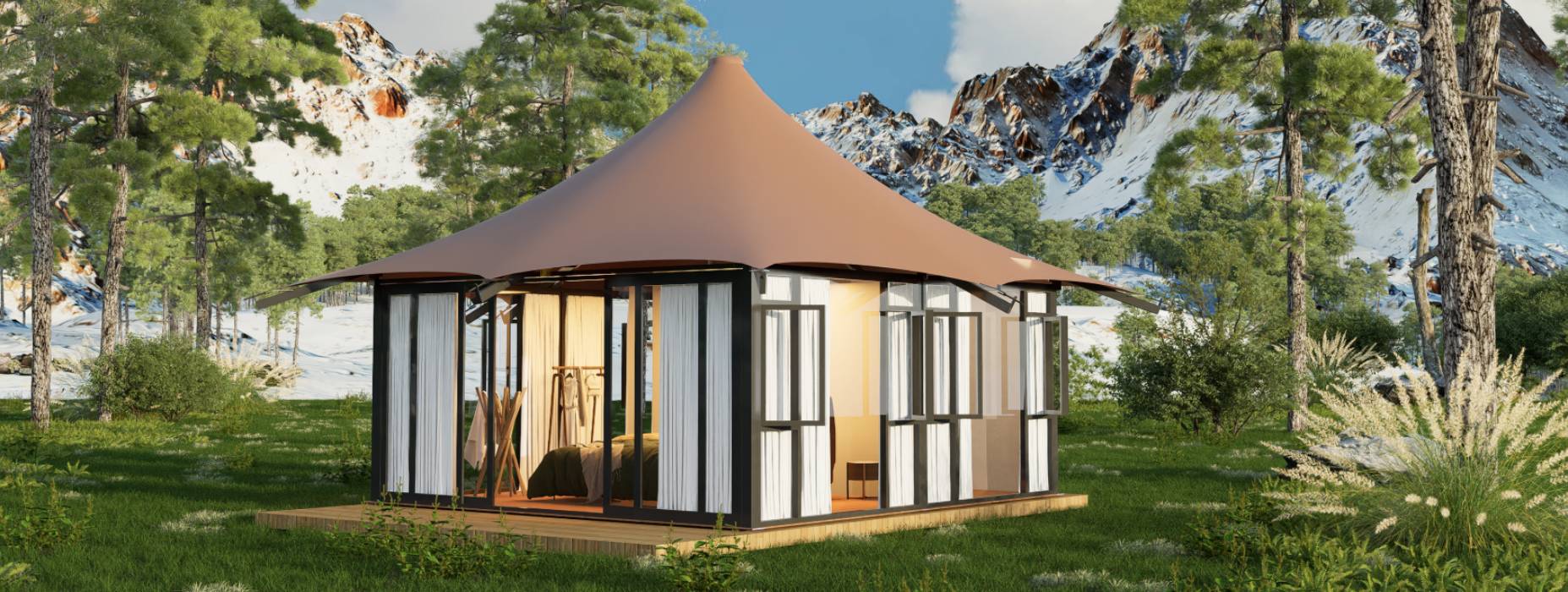
Imagine standing atop a snowy bluff at midnight, breath fogging silver against diamond skies, while inside your tent—warmed by silent radiant heaters—you sip spiced cider beside a crackling fire. Now fast forward to July: same breathtaking view through panoramic windows, but now cooled air whispers through linen curtains as you watch thunderheads build over distant peaks. This isn’t science fiction; it’s the reality of next-generation climate-controlled glamping tents transforming how we experience nature’s extremes.
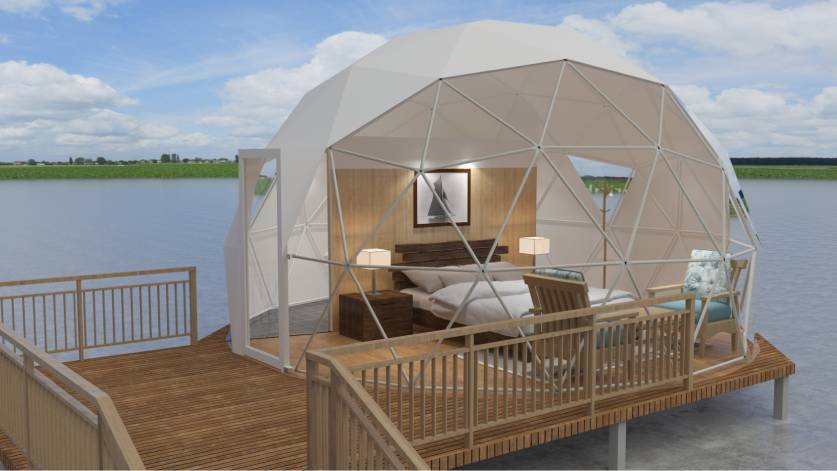
Engineering Nature’s Force Field
Traditional camping gear fights weather; these structures harmonize with it. Triple-pane low-e glass windows reject blistering desert sun yet capture winter sunlight for passive heating, working in tandem with smart HVAC systems that adjust automatically based on geolocation and live meteorological data. In Arizona’s summer furnace, phase-change materials embedded in walls absorb daytime heat slowly releasing it after dark—like botanical thermal batteries—while rooftop solar arrays power silent AC units keeping cabins crisp without fossil fuel reliance. Up north during blizzards, vacuum-insulated panels withstand subzero winds better than many suburban attics, maintaining toasty interiors even when drifts pile higher outside. It’s biomimicry meeting NASA-grade efficiency: adaptive camouflage mimicking chameleon skin shifts the tent’s exterior profile across seasons, reducing wind resistance by 40% compared to rigid structures.
The magic lies beneath footsteps too. Raised platforms elevate living spaces above floodplains yet sink deep enough into permafrost zones via screw pile foundations stabilizing temperatures year-round. Some designs feature retractable tunnel entrances shielding against sideways rainstorms common in monsoon regions, while magnetic seals keep insects out without chemical sprays. Every component serves double duty: rain gutters double as planter boxes nurturing native wildflowers; solar vents shaped like birdhouses actually monitor CO₂ levels indoors. Nothing here feels cobbled together—it flows as organically as the landscape itself.
Design That Dances With Seasons
Step inside any season and find curated comfort zones responding intuitively to environmental cues. Autumn’s crispness inspires modular furniture arrangements clustered around central fireplaces made from recycled cast iron stoves, their flue pipes doubling as trellises growing late-harvest grapevines trained upward toward skylight openings. Come spring, those same modules slide apart creating open pavilions where morning yoga sessions greet migrating warblers whose songs filter through acoustic ceiling baffles amplifying natural soundtracks. Summer brings retractable shade sails woven from UV-blocking palm fronds lowering overhead tension automatically as UV indexes climb; winter triggers motorized blackout blinds retaining heat radiating from underfloor heating coils powered by geothermal exchange loops dug six feet deep.
Textiles tell time too. Thick wool rugs handwoven by local artisans appear November through March before retreating into storage vaults come May, replaced by seagrass matting drying dewdrops instantly off bare feet. Sleep systems adapt similarly: memory foam mattresses inflate firmness settings via phone apps catering to personal preference shifts between summer softness and winter support needs. Linens change autonomously—flannel sheets emerge when mercury dips below ten degrees Celsius; lightweight bamboo silk unfurls when humidity climbs past sixty percent. You won’t find plastic fans here—only cedar-bladed ones moved gently by rooftop turbines capturing updraft currents.
Adventure Without Compromise
What good is luxury if adventure becomes secondary? These tents anchor epic experiences previously reserved for hardcore survivalists now accessible to anyone willing to trade roughing it for refined exploration. In Iceland’s volcanic highlands, guided ice cave tours begin steps away from heated entry vestibules stocked with parkas rated to -60°F; returning adventurers thaw numb fingers near Swedish wood stoves imported directly from Kiruna’s Arctic Circle hotels. Down under Australia’s Outback, night vision goggles stored beside beds reveal nocturnal dingoes prowling while air conditioning hums steadily against 115°F afternoons outside. Costa Rican rainforest sites offer suspended bridge access connecting tent platforms directly to canopy ziplines—no muddy hikes required—with waterproof gear lockers storing cameras safely between downpours.
Even “downtime” sparkles innovation. Stargazing loungers recline at precise angles calculated for optimal constellation viewing based on your exact GPS coordinates and time date stamped entry. Telescope mounts track Jupiter’s moons automatically; apps identify celestial bodies mid-conversation without breaking immersion. Meals mirror surrounding ecosystems: foragers deliver morel mushroom risotto foraged dawn patrols collected hours earlier; sushi grade tuna arrives flown fresh from nearby reef systems monitored daily for sustainability compliance. Wine lists lean local—biodynamic Pinot Noir from nearby valleys chilled perfectly whether poured over ice or warmed mulling spices depending on thermostat readings.
Why Build Walls When You Can Bridge Worlds?
This isn’t merely accommodation—it’s ecological diplomacy made tangible. Each structure functions as citizen scientist outpost collecting real-time climate data shared anonymously with universities studying global change impacts locally. Rainfall sensors log precipitation patterns affecting endemic plant species growth cycles; air quality monitors alert conservation teams about wildfire smoke drift patterns miles away. Guests participate unconsciously simply by living there: carbon footprint calculators embedded in booking portals offset stays through verified reforestation projects nearby; greywater systems irrigate food forest gardens supplying communal dinners full circle back into local economies.
There’s profound poetry here too. A family watches monarch butterflies cluster on their deck railings during fall migration—the same species their grandparents once saw decades ago—because microclimates preserved beneath these engineered canopies continue offering safe harbors amid shrinking habitats elsewhere. Grandparents video call grandchildren showing them northern lights dancing above frozen lakes via high-speed satellite Wi-Fi that disappears respectfully after bedtime stories begin. Memories crystallize differently when surrounded by both raw wilderness AND refined comfort—they stick like sap on pinecones rather than fading postcard images filed away digitally.
So ditch the notion that great outdoors requires great sacrifice. With climate-controlled glamping tents, every storm becomes scenery, every season brings new discovery, and comfort isn’t just permitted—it’s programmed into every nanometer of your wild retreat. Pack lightly; curiosity suffices. The world outside your door has never been closer—or more beautifully temperate.