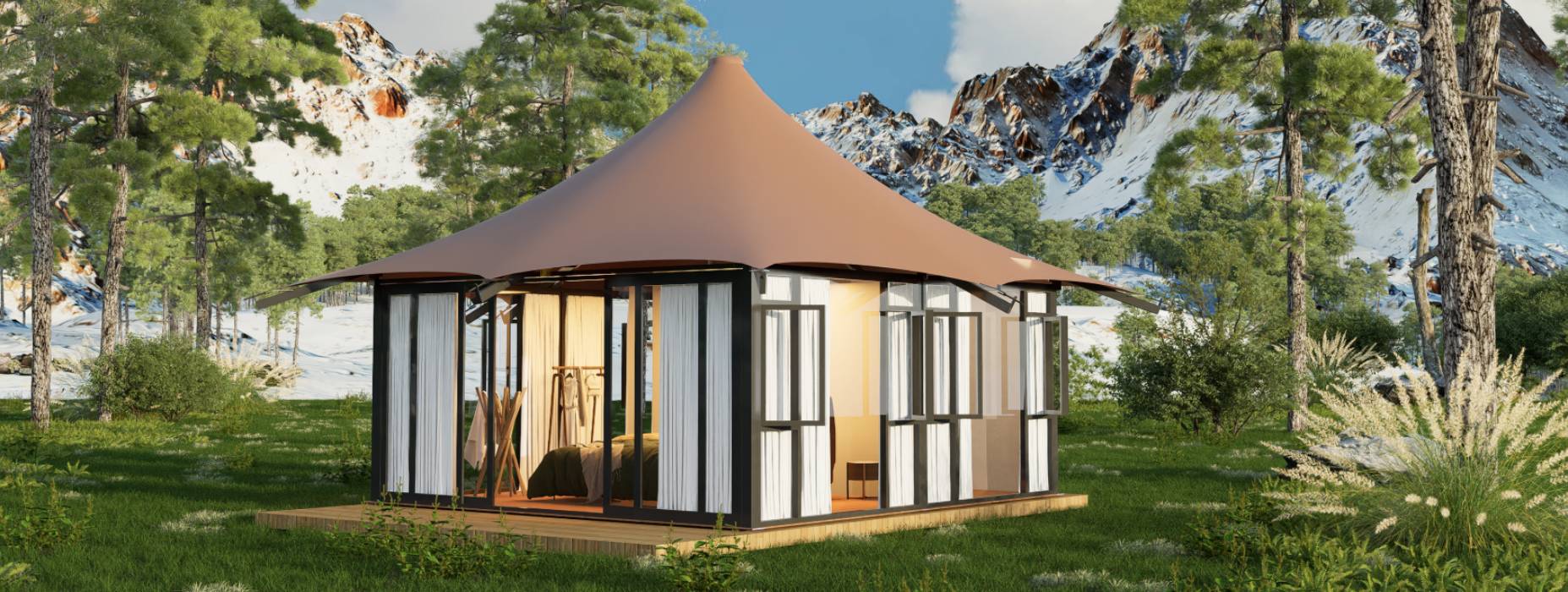
The wilderness calls—but not at the expense of comfort or conscience. A new era of outdoor hospitality has emerged, where "roughing it" no longer means sacrificing elegance, and sustainability isn’t an afterthought but the very foundation of luxury. Enter the world of redefined glamping: high-design tents that marry avant-garde aesthetics with eco-conscious innovation, proving that adventure and opulence can coexist harmoniously under the open sky.
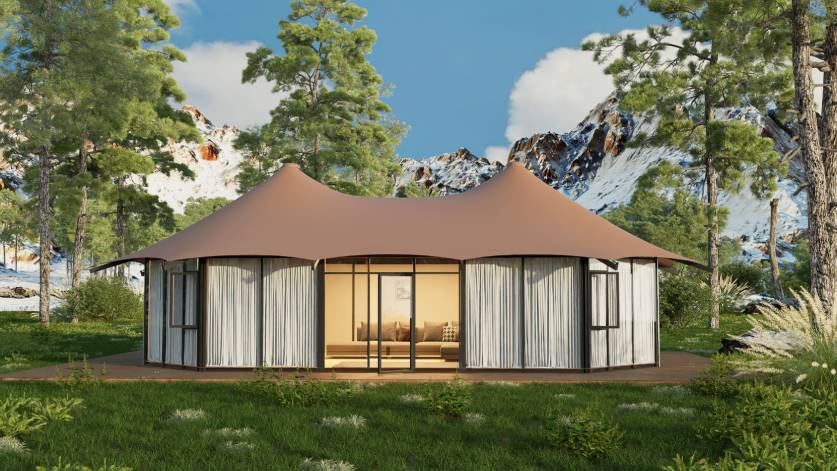
Architecture as Art
Forget canvas flaps and flimsy poles. Today’s premium glamping tents are architectural masterpieces, engineered from cutting-edge materials like UV-resistant PC panels, recycled aluminum frames, and waterproof membranes woven with plant-based fibers. Their silhouettes blend organic curves with geometric precision—think vaulted ceilings lined with solar-reflective fabric to regulate temperature naturally, expansive floor-to-ceiling windows framing uninterrupted views of valleys or coastlines, and private terraces suspended above treetops. One landmark design in Costa Rica even uses root systems as structural supports, letting vines climb walls to create living mosaics. These aren’t temporary shelters; they’re destination landmarks sculpted by wind, light, and landscape itself.
Inside, curated interiors rival boutique hotels. Handwoven wool rugs layer over polished concrete floors; locally sourced teak furniture carries the earthy warmth of nearby forests; and bedding features linen spun from French flax, crisp yet softened by stonewashed finishes. Lighting shifts with the sun—warm golden hues at dawn transitioning to cool silver tones under starry nights—all controlled via motion sensors minimizing energy use. Some suites incorporate collapsible partitions, transforming sleeping quarters into communal lounges with a single gesture. This is camping reimagined as minimalist chic meets maximal impact.
Luxury Without Footprints
True indulgence here means treading lightly. Every element serves dual duty: rainwater collected on rooftop gutters filters into shower systems; greywater irrigates native wildflower gardens planted around sites; solar panels embedded discreetly into deck planks power LED lamps and smart climate controls. Even the toiletries tell a story—biodegradable packaging holds organic soaps scented with regional essential oils (think cedar from Canadian Rockies or sandalwood from India’s Western Ghats). Food follows suit: Michelin-inspired menus prioritize hyperlocal ingredients, with chefs foraging edible flowers minutes before plating them alongside heritage grains milled at nearby farms. Zero-waste pantries stock bulk spices in reusable glass jars; compost bins turn coffee grounds into nutrient-rich soil for community vegetable patches.
Technology fades into the background until needed. A subtle app guides guests through hidden trails using augmented reality, while another adjusts tent ventilation based on real-time air quality readings. But there’s no screen clutter—instead, telescopes invite stargazing, field guides teach identification of nocturnal wildlife tracks, and analog record players spin vinyl collections featuring ambient nature sounds mixed with classical melodies. Wi-Fi exists solely for sharing sunset photos, never as distraction from the moment itself.
Community-Centric Exploration
Beyond individual tents lie ecosystems designed for connection. Collective pavilions host morning yoga overlooking mist-shrouded peaks, afternoon workshops on traditional basketry led by Indigenous elders, evening fire circles where storytellers weave local legends into constellations overhead. Kids disappear into “explorer clubs” armed with magnifying glasses and journals, documenting frog migrations or bird nesting habits under counselor supervision. Families roast marshmallows using sticks harvested responsibly from deadfall woodpiles—no chainsaws required. It’s wilderness therapy wrapped in shared purpose.
Some camps partner with conservation NGOs, offering guest experiences tied directly to preservation efforts. Guests might monitor sea turtle hatchlings during nesting season on Mexican beaches, tag monarch butterflies migrating through Mexico, or plant endemic saplings beside stream restoration zones. Their stay contributes directly to biodiversity protection; many operators donate a percentage of profits to land stewardship initiatives.
Why It Matters Now
As climate anxiety grows globally, travelers crave experiences that align values with actions. They seek proof that luxury need not exploit—that abundance can regenerate rather than deplete. Redefined glamping answers this call urgently: it demonstrates how hospitality can anchor itself firmly within planetary boundaries while elevating human experience. When your tent overlooks a regrowing wetland restored partly by your visit’s contribution, when you fall asleep listening to crickets knowing your carbon footprint was offset tenfold through renewable energy credits… that’s freedom worth paying for.
Step inside these sanctuaries and you’ll discover something profound: roughing it has evolved into something far richer—the chance to live lavishly within limits, to find beauty in restraint, and to wander thoughtfully across Earth’s last wild places. The future of travel isn’t just greener—it’s garnished with starfruit compote delivered by electric golf cart, wrapped in Kenyan shuka blankets washed sustainably, and priced equally between seasons. Come pitch a tent without losing yourself. After all, paradise shouldn’t cost the earth.